
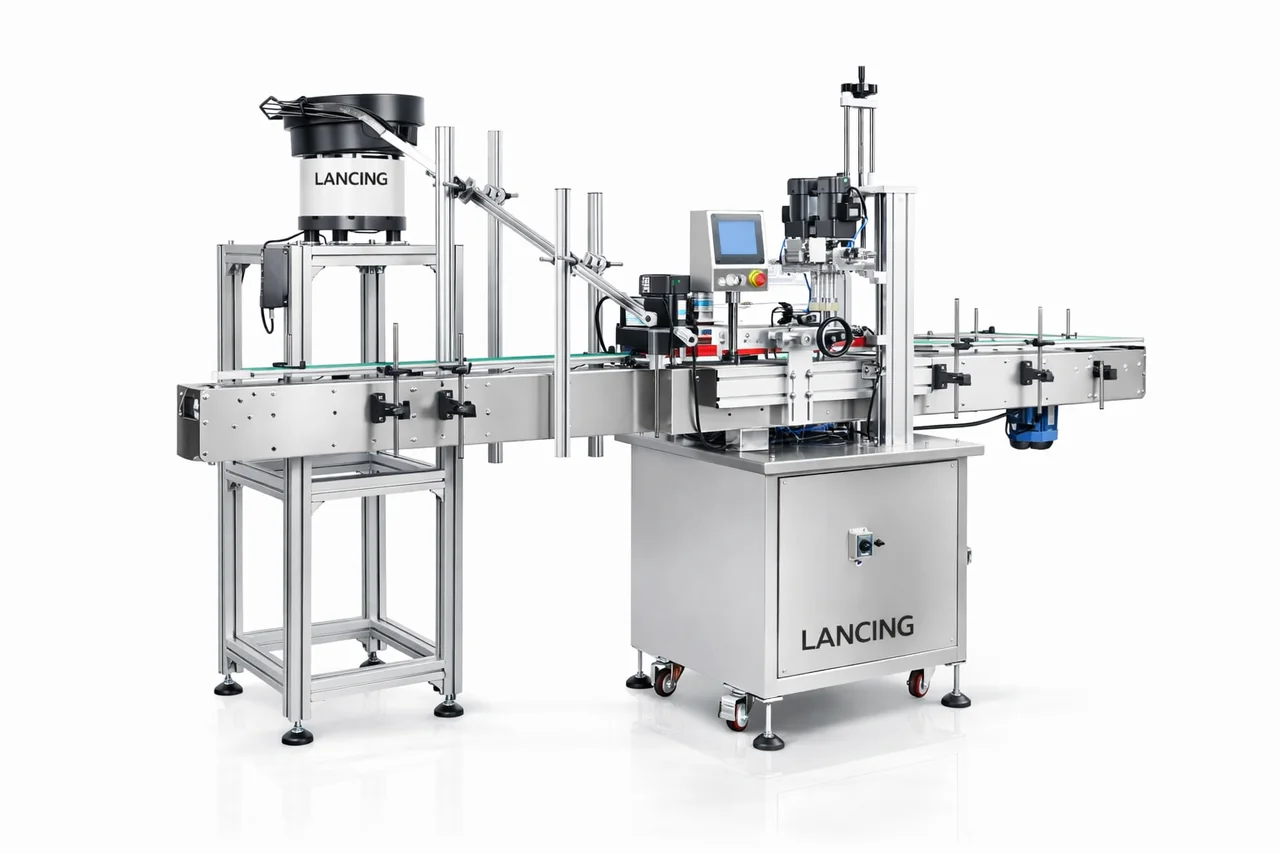
Match screw caps, ROPP closures, vacuum lids, pumps, triggers, foils and heat seals to the pack.
Identify the closure and finish
Obtain drawings and samples for the container neck, closure, liner and tamper feature. Measure production variation, not only nominal dimensions.
Screw and pump closures
Chuck, spindle and handheld systems suit different cap types and outputs. Pumps and triggers may need orientation, pre-engagement and controlled torque.
ROPP and pilfer-proof closures
Roll-on closures need tooling matched to the exact cap and bottle finish. Verify thread formation, skirt roll, bridges and removal torque.
Vacuum and twist-off lids
Jar lids may be applied with steam vacuum or mechanical vacuum depending on the product process. Headspace, fill temperature and lid compound affect the result.
Heat seals and lidding film
Time, temperature, pressure, dwell and material compatibility determine seal strength. Protect the flange or seal area from product contamination.
Inspection and rejects
Check closure presence, height, orientation, torque or seal integrity. Define whether the line stops or rejects a failed pack and how the event is recorded.
Common questions
Can one capper handle several cap sizes?
Usually within a defined range using change parts, recipes or adjustable tooling. Cap feed systems and pumps/triggers may require dedicated parts.
What is the correct cap torque?
The closure and container suppliers should define the application and removal requirements. Production checks should use an agreed method and account for time after application.
Is induction sealing the same as capping?
No. A cap is normally applied first; an induction sealer then heats a foil liner to bond it to the container finish, where materials are compatible.