
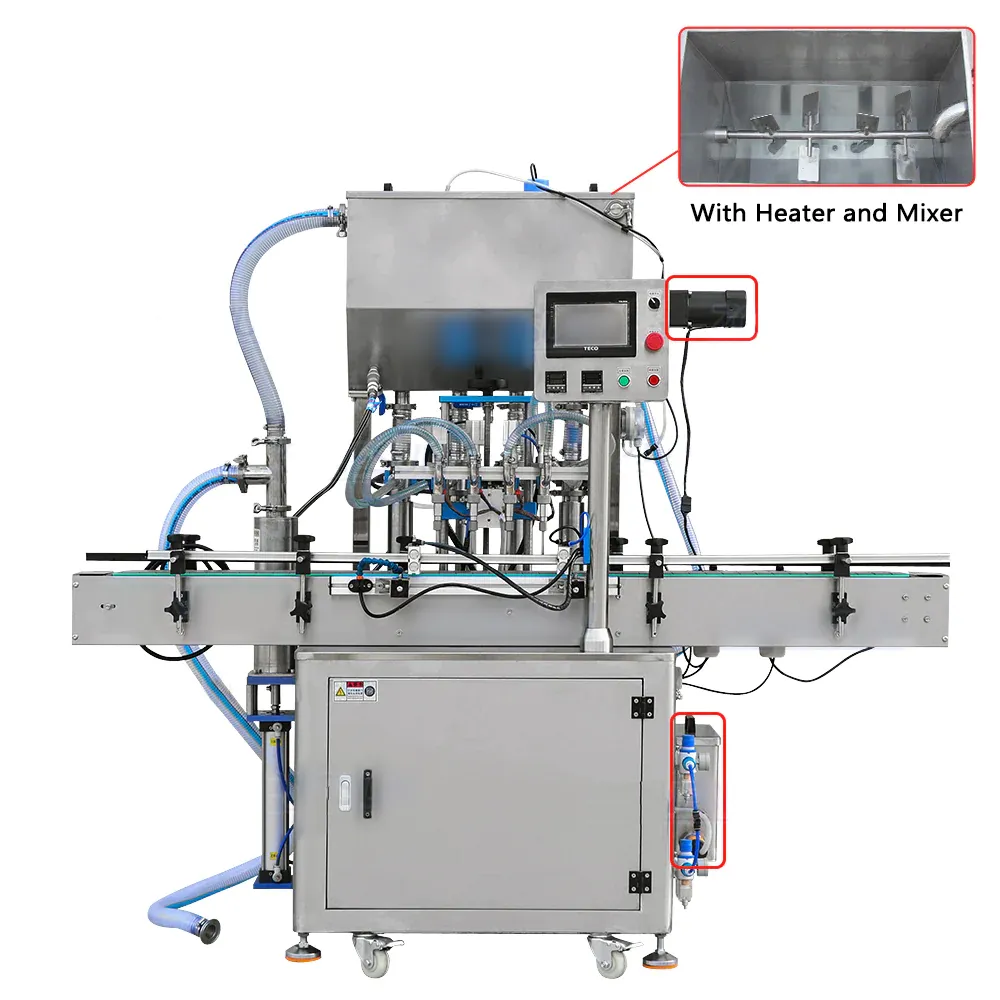
Temperature control, heated tanks, closure vacuum, cooling and scalding protection for hot-fill processes.
Why fill hot?
Hot filling may reduce viscosity, support container decontamination, create closure vacuum or form part of a preservation process. The required result must be defined by the product technologist.
Use heated and agitated holding tanks
Jacketed vessels maintain temperature while sweep or controlled agitation prevents settling and local overheating. Tank geometry should minimise dead areas and excessive residence time.
Control the full product path
Measure temperature at the tank, transfer line and nozzle. Insulated or heated hoses, valves and nozzles prevent cooling that causes dose errors or blocked product paths.
Match the container and closure
Confirm that jars, bottles, liners, lids and labels tolerate the fill and cooling cycle. Headspace, cap application and inversion may affect vacuum and seal performance.
Protect operators
Above 45°C, assess scalding. Use guarding, splash containment, insulated surfaces, safe drain-down, interlocks and suitable PPE. Consider how blockages and cleaning are handled while equipment is hot.
Validate cooling and distribution
Controlled cooling protects product quality, pack dimensions and vacuum. Test finished packs after storage and transport, not only when they leave the capper.
Common questions
What temperature should a hot-fill product use?
There is no universal temperature. It depends on formulation, microbiological target, viscosity, pack and closure. The validated product process should define the set point and permitted limits.
Why does a jar lid button not pull down?
Possible causes include low fill temperature, excessive headspace, slow capping, poor closure application, damaged sealing compound, leakage or an unsuitable cooling profile.
Can plastic bottles be hot filled?
Only if the bottle, neck finish, closure and handling method are designed and validated for the temperature and vacuum or pressure changes involved.