
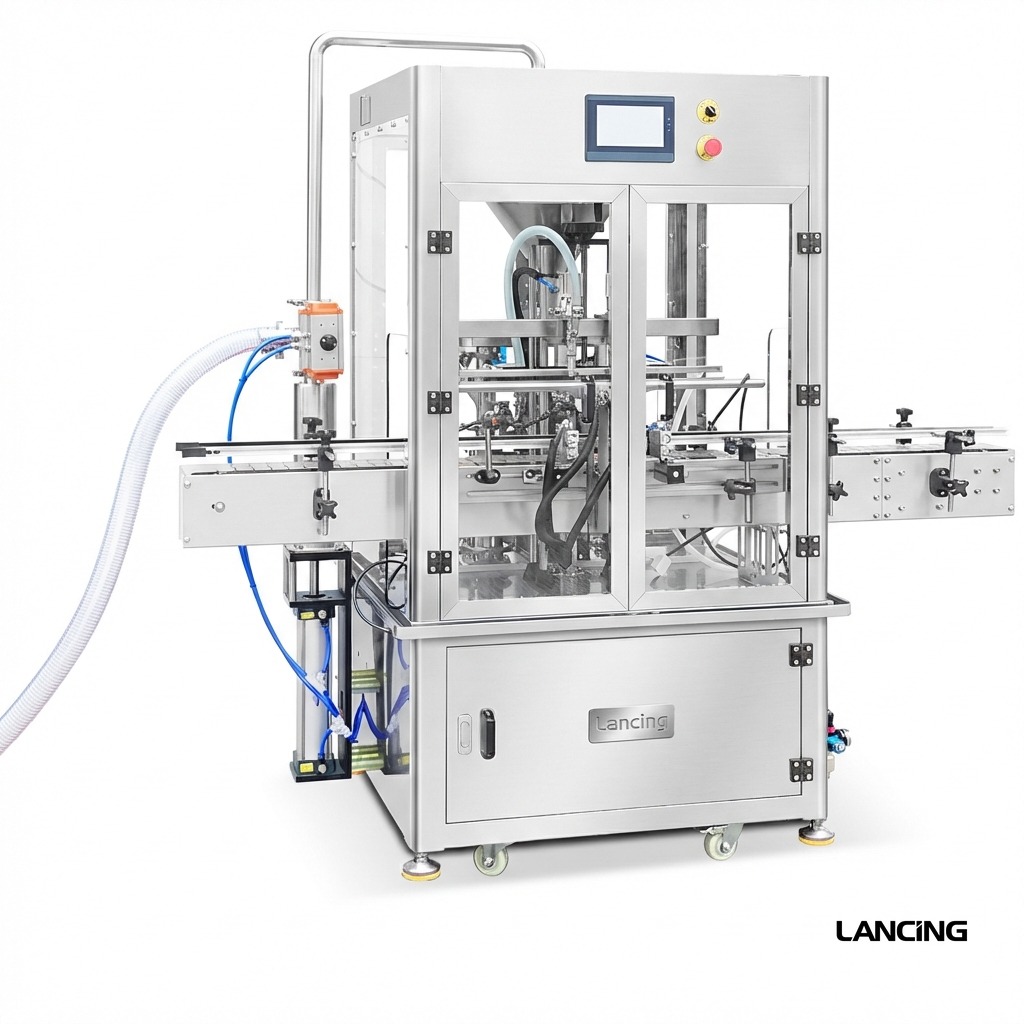
A structured method for choosing a filler from product behaviour, dose, pack, cleaning and output.
1. Define the product
Record viscosity or flowability at the real filling temperature, density, foaming, inclusions, shear sensitivity, chemical hazard, shelf-life process and cleaning constraints. Use ranges rather than one nominal value.
2. Define the dose and accuracy
List every fill volume or target weight, the legal or commercial tolerance, how accuracy will be measured, and whether product density changes between batches or temperatures.
3. Select the dosing principle
Free-flowing liquids may suit gravity or flowmeter filling; viscous products often need piston or positive displacement; powders use auger or vacuum dosing; granules use weighers; tablets and capsules use counters.
4. Design the product feed
A good filler cannot compensate for a poor supply. Size tanks, pumps, hoppers, refill controls, agitation, heating, filtration and transfer routes around the product and batch method.
5. Include the pack and closure
Container stability, neck opening, height, finish and material affect nozzle access and conveyor handling. The closure, label and code may become the line bottleneck.
6. Specify cleaning and changeover
Agree what must be stripped, washed, flushed or cleaned in place; who performs it; acceptable time; verification; allergen or chemical segregation; and how retained product is recovered.
7. Calculate sustainable output
Translate weekly demand into packs per minute after changeovers, cleaning, breaks, refills and rejects. Balance the complete line rather than buying one fast machine.
8. Prove it with a trial
Run the most difficult product, smallest and largest dose, every closure and the least stable container. Record accuracy, presentation, speed, cleaning and operator intervention.
Common questions
Is a piston filler always best for thick products?
No. Piston, lobe, rotor and progressive-cavity systems each suit different viscosities, inclusions, shear limits, cleaning and dose ranges. A trial determines the best route.
Should filling machines be selected by packs per minute?
Only after product and pack feasibility is established. Sustainable line output also includes refill, closure, labelling, rejects, changeovers, cleaning and operator work.
Can the same filler handle liquids and pastes?
Some servo-piston or pump systems cover a broad range, but no single machine is universal. Confirm the complete product window and acceptable changeover before purchase.