
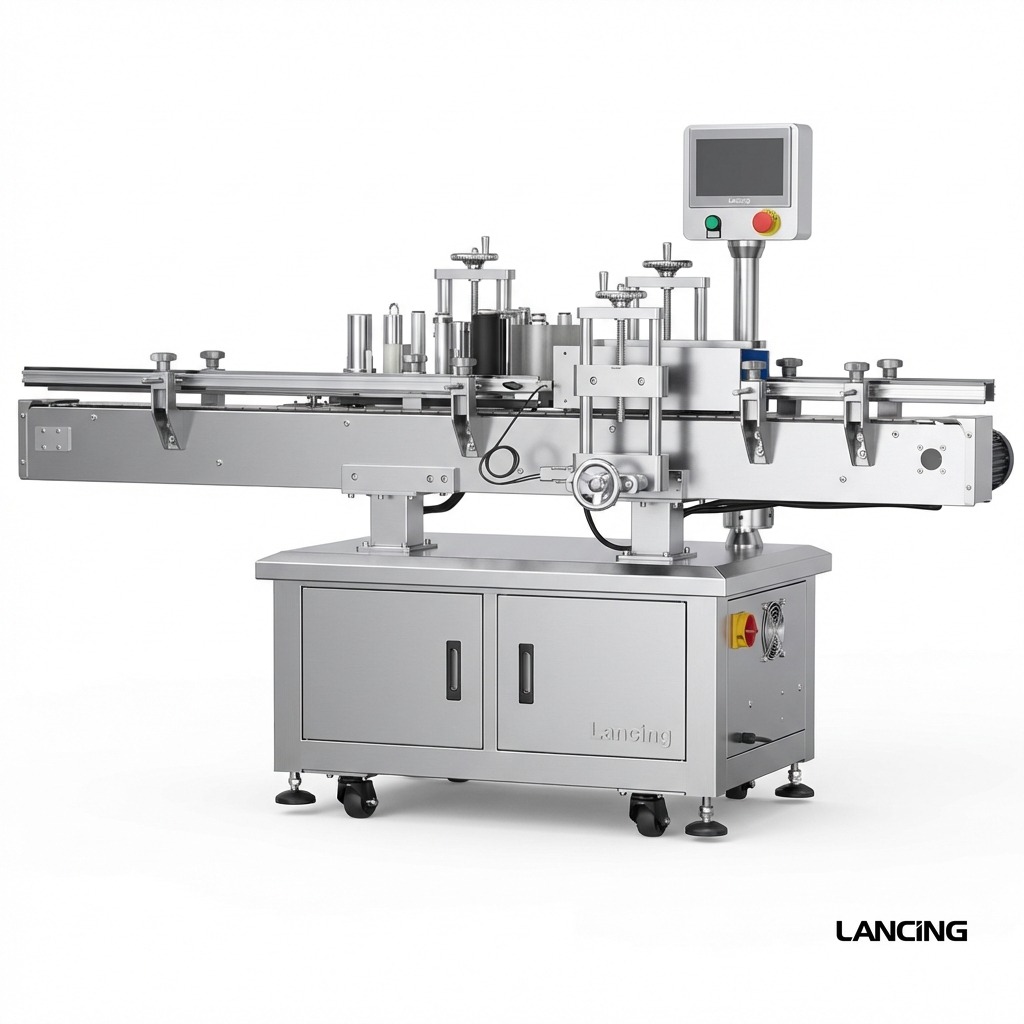
Select wrap-around, front/back, top, sleeve and tamper-evident labels with reliable batch coding.
Choose the label presentation
Round packs may use wrap-around labels; flat or oval packs use front/back heads; top labels can bridge lids; sleeves suit full-body decoration and tamper evidence.
Control the container
Guides, spacing devices and product stabilisation keep the pack in a repeatable orientation. Soft, tapered, hexagonal or irregular packs may need dedicated handling.
Specify label construction
Confirm label size, gap, backing width, roll direction, core, outside diameter, adhesive, facestock and minimum application temperature.
Add batch and date coding
Hot foil, thermal transfer, inkjet and laser each suit different surfaces and data. Position the code where it remains legible and can be inspected.
Prevent label and data mix-ups
Barcode or vision systems can compare printed data and label identity to the work order. Define stop, reject, alarm and audit requirements.
Test after filling
Wet, oily, dusty, cold or hot packs can affect adhesion. Test the finished pack after cooling, wiping, storage and distribution.
Common questions
Can front and back labels be on one roll?
Yes. A single wrap-around head can apply two labels from one roll to a round bottle when the labels and gaps are arranged correctly.
How are batch codes printed on labels?
A hot-foil or thermal-transfer coder can be integrated at the label web. Inkjet can also code the product after labelling.
Can a labeller check the printed barcode?
Yes. A downstream scanner or vision system can rescan the applied label and stop or reject when the code does not match the expected data.