
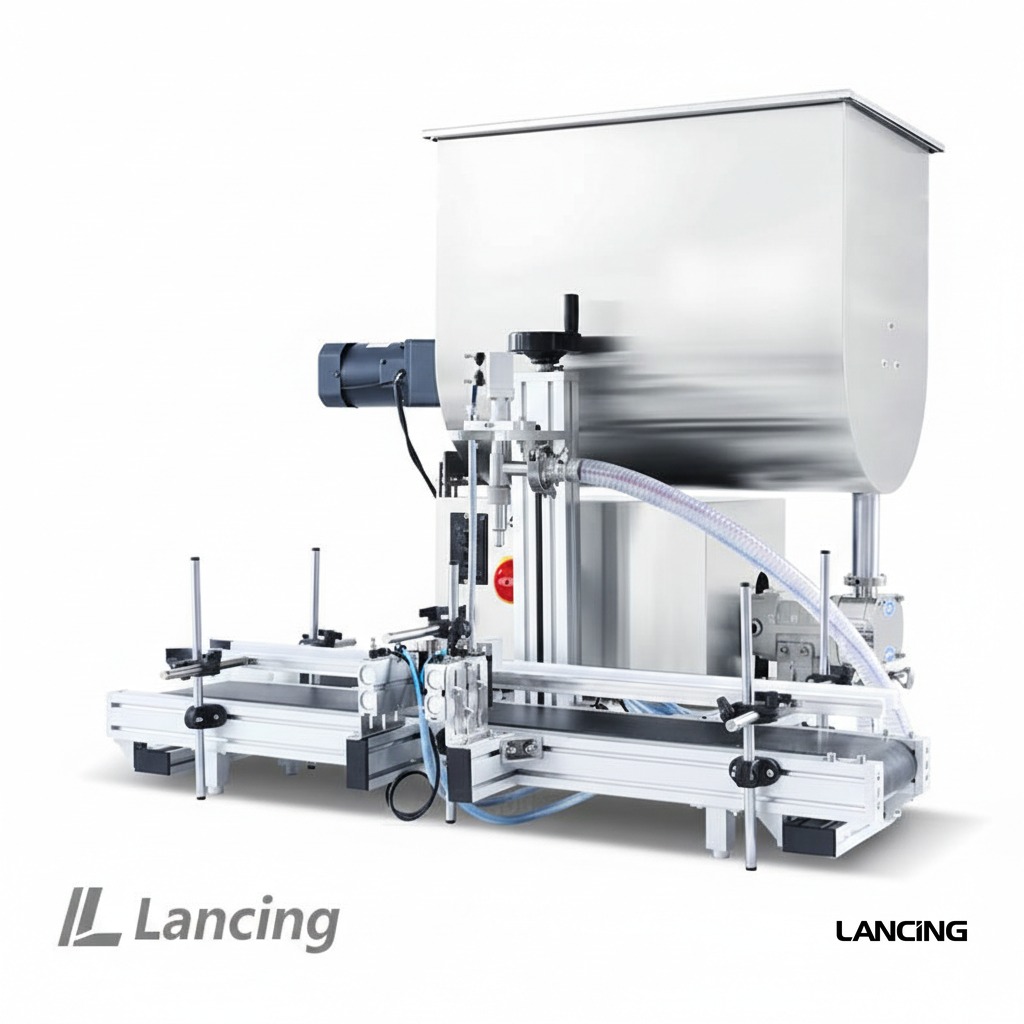
Keep seeds, fibres, pieces and solids in suspension while protecting valves, pumps and dose consistency.
Characterise the inclusions
Record maximum size, shape, hardness, fibre length, concentration and tendency to settle or float. Use the largest real piece to size every product passage.
Keep the mixture uniform
Sweep agitation, top entry mixing or gentle recirculation can maintain distribution. Excessive speed may damage pieces, entrain air or change the product texture.
Avoid restrictive check valves
Small spring-loaded check valves can trap seeds or fibres. Large-port rotary valves, lobe/rotor pumps or progressive-cavity systems may provide a clearer route.
Control the hopper and transfer
Use short, large-bore pipework and avoid dead legs. Hopper geometry and refill method should not separate liquid and solids.
Test dose composition
A stable total weight does not guarantee the right ratio of pieces to liquid. Sample several packs through the batch and after planned stops.
Common questions
What particle size can a filler handle?
That depends on the smallest passage through valves, hoses and nozzles, as well as particle shape and compressibility. Test the maximum real inclusion.
Does faster agitation prevent settling?
Not necessarily. Agitation must be strong enough to maintain suspension but gentle enough to avoid damage, aeration or vortexing.
Can a standard piston filler handle seeds?
Some can, but the valve and nozzle design are critical. Large-port rotary valves are often preferred where conventional checks may block.