
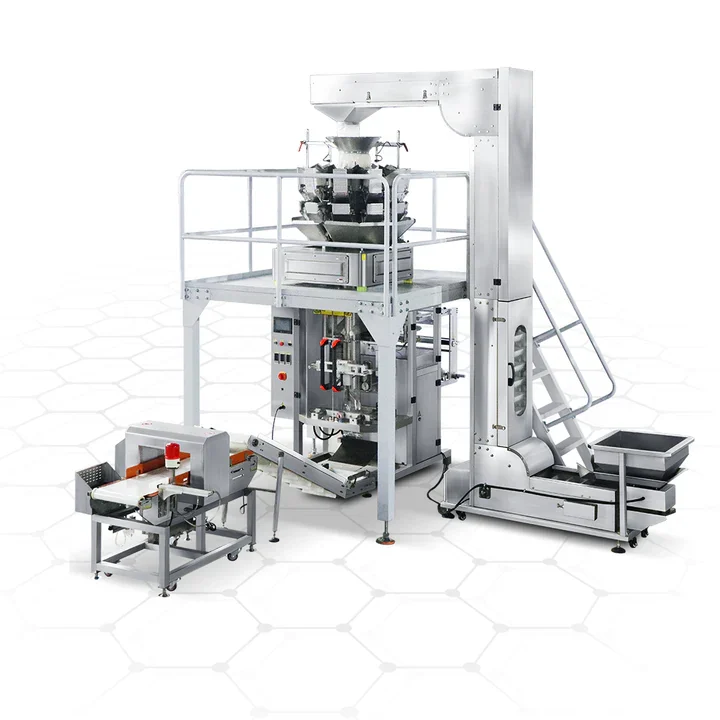
Compare preformed pouch filling with vertical form-fill-seal for liquids, powders, granules and pieces.
Preformed pouch filling
Ready-made pouches are picked, opened, filled and sealed. They support premium shapes and zips but need reliable pouch presentation and opening.
Vertical form-fill-seal
VFFS draws film around a forming tube, makes the longitudinal seal, doses the product and creates top/bottom seals. It is efficient for many powders and granules.
Liquids and pastes
Liquid sachets need controlled cut-off and seal-area protection. Product temperature, viscosity and dose determine pump and nozzle design.
Powders and granules
Augers suit many powders; weighers suit granules and pieces. Dust extraction, anti-static measures and product-in-seal control are critical.
Film and sealing trials
Film structure, coefficient of friction, print registration, seal window and product compatibility must be tested on the machine.
Coding and inspection
Thermal transfer coding can print variable data on film. Seal inspection, checkweighing and metal detection may be integrated according to risk.
Common questions
Is VFFS suitable for small batches?
It can be, but film setup, cleaning and changeovers may make a preformed pouch or semi-automatic solution more practical at low volume.
Can the same machine pack powder and liquid?
Usually not without significant change in dosing and seal-area control. A machine should be specified around a defined product family.
What causes pouch seals to fail?
Common causes include product contamination, incorrect time/temperature/pressure, unsuitable film, wrinkles, worn jaws and poor cooling.